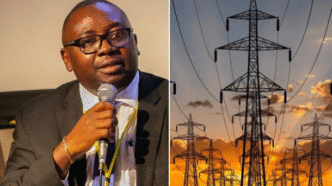

Nigeria is in advanced negotiations with China’s Export-Import Bank for a $2 billion loan to fund the construction of a new “super grid” — a transformative electricity transmission network designed to end the nation’s long-standing power shortages and drive industrial expansion.
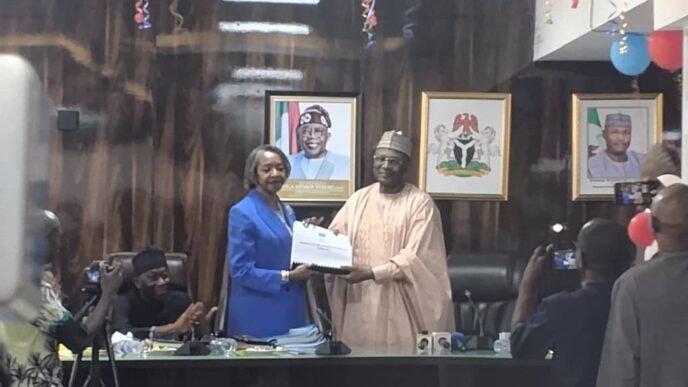
Minister of Power, Adebayo Adelabu, confirmed the development on Monday in Abuja, describing the proposed infrastructure as a “strategic leap” toward energy stability and economic modernization.
A New Dawn for Nigeria’s Power Sector
Adelabu explained that the new super grid will operate alongside the existing national grid, serving as a high-capacity, more resilient backbone for electricity transmission. This parallel network is expected to eliminate frequent grid collapses and expand the nation’s ability to distribute power generated from both fossil and renewable sources.
“We are currently engaging with the Export-Import Bank of China for a $2 billion facility to fund this strategic project. The super grid will be key to unlocking Nigeria’s industrial potential and ensuring reliable power supply nationwide,” Adelabu said.
He noted that the project aligns with President Bola Tinubu’s Renewed Hope Agenda, which places energy security and industrial growth at the heart of national development.
Why Nigeria Needs a Super Grid
Nigeria, Africa’s most populous nation, continues to face chronic electricity shortages despite decades of reforms and investments. The country generates an average of 4,000–5,000 megawatts for over 200 million people, compared to South Africa’s 50,000 MW for a population of 60 million.
Frequent grid collapses — sometimes occurring multiple times in a single month — have crippled businesses, slowed industrial output, and discouraged investment. According to data from the Transmission Company of Nigeria (TCN), the national grid has experienced over 140 partial or total collapses in the last decade.
The planned super grid will introduce high-voltage direct current (HVDC) technology capable of long-distance transmission with minimal losses. It will also incorporate smart-grid systems for real-time monitoring, fault detection, and automated recovery — features currently lacking in the existing grid.
Strategic Partnership with China
Nigeria’s engagement with China’s Export-Import Bank continues a pattern of strategic cooperation between both nations on infrastructure financing. China has previously funded major projects such as:
- The Abuja-Kaduna railway line,
- The Zungeru Hydroelectric Power Project, and
- Parts of the National Integrated Power Project (NIPP) infrastructure.
Experts say the new super grid project could deepen this partnership, potentially leading to technology transfer and the training of Nigerian engineers in advanced transmission systems.
“China’s involvement is not just about funding — it’s also about technical expertise,” said energy economist Dr. Sam Oguche. “If Nigeria leverages this opportunity well, we could modernize our grid faster than expected.”
Economic and Industrial Implications
A reliable electricity grid is crucial for Nigeria’s industrialization drive. Manufacturing firms, especially in sectors like cement, steel, and agro-processing, have consistently cited unstable power as their biggest challenge.
According to the Manufacturers Association of Nigeria (MAN), energy costs account for up to 40% of total production expenses in some industries, due to reliance on diesel generators.
The super grid, if completed, could reduce this dependence by ensuring steady supply to industrial clusters and special economic zones. The Ministry of Power projects that transmission capacity will rise from the current 8,000 MW to over 20,000 MW within five years after completion.
Government’s Broader Energy Agenda
The federal government has been pursuing multiple power initiatives aimed at reforming the sector and attracting private investment. Among them:
- The Presidential Power Initiative (PPI) in partnership with Siemens Energy, targeting grid modernization and capacity expansion to 25,000 MW.
- The Renewable Energy Roadmap, which aims to achieve 30% clean energy contribution to the national grid by 2030.
- Distribution reforms under the Nigerian Electricity Regulatory Commission (NERC) to enforce service-reflective tariffs and improve liquidity across the value chain.
Adelabu said the super grid will complement these efforts by addressing the “missing link” in the power chain — the transmission bottleneck.
“Generation is improving, and distribution companies are expanding their networks. But the transmission line remains the weakest link. This project will finally fix that,” he said.
Challenges and Transparency Concerns
Despite optimism, analysts caution that the success of the $2 billion project will depend on transparency, accountability, and sustainability. Nigeria’s history with large-scale infrastructure loans has been mixed, with several projects delayed or abandoned due to poor oversight.
“Funding alone does not solve the problem,” said energy policy analyst Ngozi Ekeoma. “We must ensure proper project management, clear repayment structures, and local content participation so that the benefits stay within the economy.”
Concerns also persist over Nigeria’s rising debt levels. According to the Debt Management Office (DMO), the country’s total public debt stood at ₦121 trillion ($79 billion) as of mid-2025. While concessional loans like those from China’s Exim Bank often carry low interest rates, experts warn that mismanagement could still worsen fiscal pressures.
Looking Ahead
The Ministry of Power is expected to finalize negotiations with China’s Exim Bank before the end of the year, after which formal project design and procurement phases will begin. Construction could start in 2026, subject to federal approval and budgetary provisions.
If implemented successfully, the super grid could become one of the most ambitious infrastructure projects in Nigeria’s history — reshaping the nation’s power landscape, boosting industrial output, and improving citizens’ quality of life.
As Adelabu put it, “Our goal is simple: to build a power system that meets the needs of Nigerians, supports industries, and drives growth. The super grid is the backbone of that vision.”