Abuja, Nigeria — November 11, 2025:
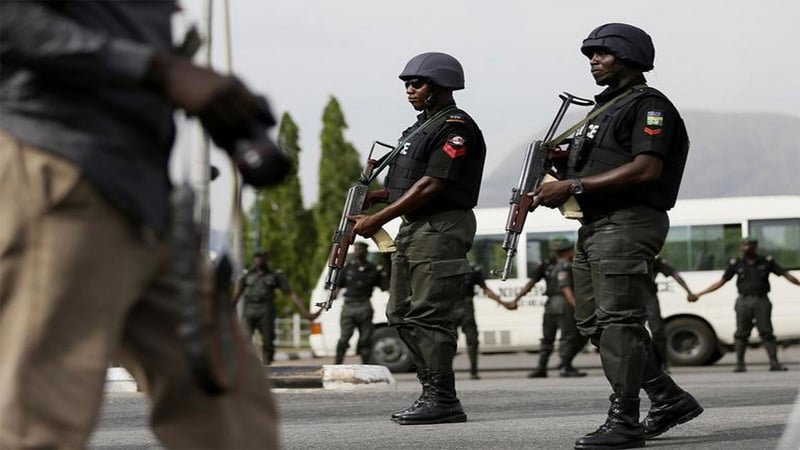
A new report by the European Union Agency for Asylum (EUAA) has revealed that more than 100,000 officers of the Nigeria Police Force (NPF) are currently deployed to protect politicians, government officials, and other Very Important Persons (VIPs), raising fresh concerns about Nigeria’s deepening security imbalance and overstretched law enforcement system.
The report, released in November 2025, highlights how the massive diversion of police personnel away from public security duties has contributed to Nigeria’s rising crime rates and inadequate community policing coverage, particularly in rural and conflict-prone areas.
According to the findings, Nigeria’s police force has an estimated strength of 371,800 officers serving a population of about 236.7 million people. This means there are roughly 157 police officers for every 100,000 citizens — far below the United Nations recommended minimum of 222 officers per 100,000 citizens.
VIP Policing at the Expense of Public Safety
The EUAA report stated that a significant percentage of Nigeria’s police officers are deployed for personal and political protection, instead of performing core policing functions such as crime prevention, traffic control, investigation, and emergency response.
“Both recent sources and sources dating back as far as 2007 claimed that the NPF had an estimated strength of 371,800, serving a total population estimated in 2024 at 236,747,130,” the report said.
“However, a substantial proportion of available police personnel are assigned to guard politicians, business elites, religious leaders, and other influential individuals, leaving communities under-policed.”
Security analysts estimate that between 25 to 30 percent of the force — equivalent to more than 100,000 officers — are attached to VIPs across federal, state, and local levels.
Policing Deficit Deepens Insecurity
Experts warn that the diversion of such a large number of officers to private security assignments has worsened Nigeria’s already fragile security situation.
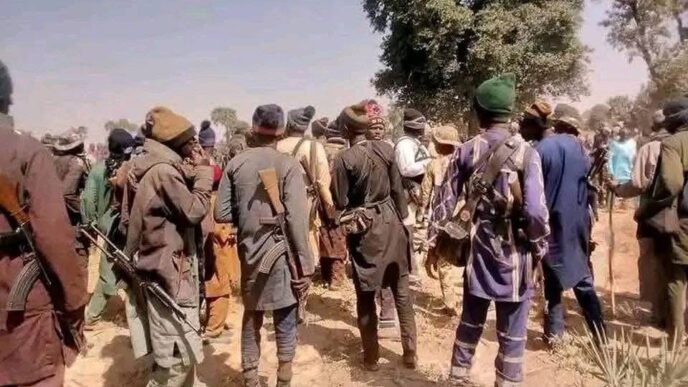
Criminal activity, including banditry, kidnapping, armed robbery, and communal clashes, continues to surge in many parts of the country, with limited police presence allowing non-state actors to dominate certain regions.
“This imbalance undermines public trust in law enforcement and leaves vast areas, especially rural communities, without sufficient security coverage,” said Dr. Kabir Adamu, a security risk consultant based in Abuja.
“While VIPs enjoy round-the-clock protection, ordinary Nigerians are forced to rely on vigilantes or self-help groups, which sometimes escalate violence rather than reduce it,” he added.
Historical Context of VIP Protection
The practice of assigning police officers to VIPs dates back to Nigeria’s military era, when politicians, state officials, and wealthy individuals began to receive personal escorts and armed security details.
Despite repeated reform promises, the policy has expanded in recent years, with many officers reportedly attached to governors, lawmakers, judges, business tycoons, and even private contractors.
In 2018, the then Inspector-General of Police, Ibrahim Idris, attempted to recall officers attached to unauthorized VIPs, but the directive was quietly reversed after political pushback. Similar initiatives by subsequent police chiefs have failed to produce lasting change.
Police Shortage and Funding Challenges
The EUAA report further noted that Nigeria’s police-to-citizen ratio is among the lowest in sub-Saharan Africa, and the shortfall has been exacerbated by poor recruitment, low morale, inadequate funding, and logistical deficiencies.
Many police formations operate without sufficient vehicles, communication gadgets, or forensic equipment. Some rural stations reportedly rely on community donations to fuel patrol vans or repair offices.
“The diversion of officers to VIP duty compounds the NPF’s limited capacity for effective policing,” the report added.
“This contributes to delayed response times, limited investigation success rates, and increasing reliance on military deployment for internal security.”
Calls for Comprehensive Reform
Civil society organizations and police reform advocates have renewed calls for the federal government to review VIP protection policies and reallocate personnel to frontline policing.
The CLEEN Foundation, a Lagos-based security research group, described the situation as “institutional capture of public security for private benefit.”
“When one out of every four police officers is protecting a single politician or businessperson, the state’s social contract is broken,” said CLEEN’s Executive Director, Ruth Olofin.
“We need urgent legislative reform to redefine police duties, introduce stricter limits on VIP protection, and strengthen community policing.”
Government’s Position
The Nigeria Police Force has not issued an official response to the EUAA report.
However, a senior officer at Force Headquarters who spoke anonymously acknowledged that “VIP deployment is a legacy challenge” and said the leadership is exploring “gradual rationalization” to restore manpower balance.
The officer explained that the police are constrained by political realities and personal security demands from public officials, especially in a high-threat environment.
Conclusion
With Nigeria’s population approaching 240 million and insecurity spreading across multiple regions, the continued diversion of more than 100,000 police officers to VIP protection underscores the urgent need for structural reform in the country’s law enforcement architecture.
Analysts warn that unless policing resources are redistributed to prioritize ordinary citizens, Nigeria’s security crisis may deepen — eroding public trust and further weakening state authority.