Nigeria’s first confirmed Ebola patient has been evacuated to Switzerland for further medical treatment aboard an air ambulance, following the confirmation of the deadly virus in the country.
The patient, a 42-year-old woman and wife of a Swiss diplomat based in Abuja, was flown out of Nigeria early on Monday, October 26, 2026, through the private aviation section of the Nnamdi Azikiwe International Airport.
The evacuation was confirmed by the Coordinating Minister of Health and Social Welfare, Professor Muhammad Ali Pate, who said the patient had shown significant clinical improvement before leaving the country.
According to the minister, the woman was stable, conscious, communicating and showing laboratory results that were approaching baseline levels.
Her husband, who had remained asymptomatic, accompanied her on the medical evacuation flight to Switzerland.
Pate said the evacuation was conducted under strict public health protocols because the patient’s clinical improvement did not necessarily mean she was no longer infectious.
The operation followed days of intensive medical care, investigations and contact-tracing activities by Nigerian health authorities after the country confirmed its first imported Ebola virus disease case in more than a decade.
Air Ambulance Leaves Abuja Airport
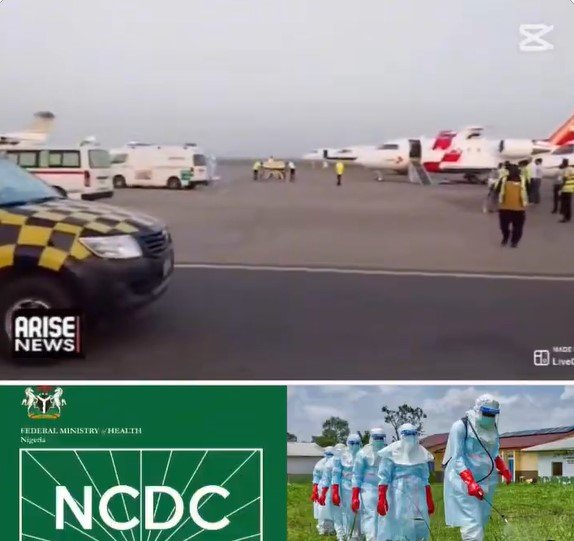
The medical evacuation took place at the private jet wing of the Nnamdi Azikiwe International Airport in Abuja in the early hours of Monday.
According to ARISE News, a convoy of ambulances and diplomatic vehicles arrived at the airport from central Abuja as preparations for the operation proceeded.
The three-vehicle convoy reportedly included a vehicle belonging to an international agency.
Airport officials cordoned off the private aviation section while arrangements were made to transport the patient safely onto the medical evacuation aircraft.
Footage obtained by the broadcaster showed the aircraft and crew involved in the operation.
The evacuation was carried out under special arrangements because of the public health risks associated with transporting a patient diagnosed with Ebola.
The Federal Government subsequently confirmed the departure through the health minister’s statement.
Pate said the operation required coordination between the clinical personnel who had treated the patient and public health officials responsible for ensuring that the transfer complied with appropriate safety procedures.
He commended the healthcare workers for their efforts in stabilising the patient and the public health teams who coordinated the evacuation.
The minister also urged Nigerians to remain vigilant and obtain information about the outbreak from credible sources.
Health Minister Confirms Patient’s Improved Condition
In his statement, Pate confirmed that the patient had departed Abuja for Switzerland with his approval.
He said her condition had improved considerably and that she was stable, conscious and able to communicate before the flight.
The minister nevertheless emphasised that these improvements should not be interpreted as proof that the patient was no longer infectious.
Ebola is a serious viral disease that can spread through direct contact with the blood or bodily fluids of an infected person who is symptomatic, or with contaminated materials.
Consequently, patients diagnosed with the disease must be managed under strict infection-prevention and control procedures.
The evacuation therefore required appropriate precautions to protect the medical crew, airport personnel, other individuals involved in the transfer and members of the public.
Pate said public health measures would continue despite the patient’s departure from Nigeria.
The government is also continuing efforts to identify, assess and monitor individuals who may have been exposed to the infection.
How Nigeria Confirmed Its First Ebola Case
Nigeria’s first confirmed Ebola case in the current outbreak was identified in a woman who arrived in the country from Uganda on October 3, 2026, after travelling through Addis Ababa, Ethiopia.
According to the Nigeria Centre for Disease Control and Prevention (NCDC), the woman developed symptoms several days after arriving in Nigeria.
The symptoms included fever, diarrhoea, generalised body aches and a sore throat.
She sought medical attention at private healthcare facilities in Abuja before laboratory investigations confirmed the infection on October 20.
The diagnosis prompted an immediate public health response involving patient isolation, laboratory testing, contact tracing and infection-prevention measures.
Health authorities also began investigating how the woman contracted the virus, including examining her recent travel history and possible exposure before arriving in Nigeria.
The case raised concerns because of the possibility of transmission across international borders and the need to establish whether any other individuals had been infected.
The NCDC subsequently intensified surveillance and worked with public health partners to identify people who might have had contact with the patient.
NCDC Identifies 53 Contacts
Before the evacuation, Nigerian health authorities reported that 53 contacts linked to the confirmed case had been identified.
The contacts included healthcare workers, domestic staff and the patient’s husband.
Contact tracing is a critical part of controlling Ebola outbreaks because it enables public health teams to identify people who may have been exposed and monitor them for symptoms.
Individuals identified as contacts are not automatically considered infected. Their risk depends on the nature and extent of their exposure.
Health authorities follow up with relevant contacts during the monitoring period and provide guidance on what to do if symptoms develop.
The NCDC has urged Nigerians to cooperate with public health officials and provide accurate information if contacted as part of the investigation.
The agency has also stressed the importance of infection-prevention procedures in hospitals and other healthcare facilities.
The evacuation of the confirmed patient and her husband does not remove the need for continued monitoring of people who may have been exposed in Nigeria.
Why the Patient Was Taken to Switzerland
The evacuation to Switzerland was linked to the patient’s nationality and medical circumstances.
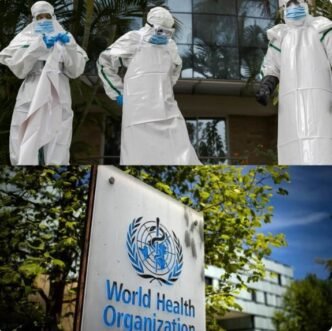
According to the World Health Organisation’s Regional Director for Africa, Mohamed Janabi, both the patient and her husband are Swiss citizens.
Janabi said the woman had been stabilised by Nigerian medical teams before the evacuation.
He commended the Nigerian authorities and healthcare workers for managing the patient through the acute phase of the illness and preparing her for transfer.
Switzerland will assume responsibility for the patient’s continued medical management and the monitoring of her husband following their arrival.
The arrangement also means that Nigerian authorities can continue focusing on contact tracing, surveillance and other public health measures within the country.
The evacuation should not be interpreted as evidence that the patient had been discharged from medical care or that the infection had become harmless. She was transferred for further treatment under controlled medical arrangements.
Ebola Strain Under Investigation
The confirmed infection has been associated with the Bundibugyo strain of Ebola virus disease.
The strain has previously caused outbreaks in parts of Central and East Africa and is distinct from other Ebola virus species.
Investigators have been examining the woman’s travel history and possible exposure to determine how she became infected.
Her recent stay in Uganda has attracted particular attention, although establishing the precise source of infection requires epidemiological investigation and supporting evidence.
The outbreak has also raised wider regional concerns because cases involving the Bundibugyo strain have been reported in other African countries.
Scientists and public health experts are investigating the relationship between reported infections and the possibility of transmission across borders.
There are currently no approved vaccines or specific treatments licensed for the Bundibugyo strain, making early detection, supportive clinical care and infection control particularly important.
Treatment focuses on managing symptoms, supporting affected organs and maintaining the patient’s physiological stability.
The patient’s reported improvement before evacuation was therefore an important development, although her continued clinical progress will depend on medical assessment and treatment.
Nigeria Continues Ebola Surveillance
Despite the evacuation, Nigerian health authorities have maintained that the public health response must continue.
Contact tracing, surveillance and infection-prevention measures remain necessary to determine whether anyone else was exposed or infected.
Health officials have also urged healthcare facilities to maintain a high level of suspicion when assessing patients with compatible symptoms and relevant exposure histories.
Suspected cases must be assessed promptly, with appropriate precautions taken while laboratory testing is conducted.
The authorities have called on the public to avoid spreading unverified information about the outbreak and to follow guidance from recognised health agencies.
Ebola does not spread simply because people share the same city or use the same public facilities. Transmission generally requires direct contact with infected bodily fluids or contaminated materials.
The identification and monitoring of contacts are therefore central to determining whether further transmission has occurred.
The government is expected to provide additional information as investigations progress and relevant public health findings become available.
Conclusion
Nigeria’s first confirmed Ebola patient has been evacuated to Switzerland aboard an air ambulance after receiving treatment in Abuja.
The 42-year-old woman, who is married to a Swiss diplomat, departed through the private aviation section of the Nnamdi Azikiwe International Airport on Monday, October 26, alongside her husband, who remained asymptomatic.
Health Minister Muhammad Ali Pate confirmed that the patient was clinically improved, stable, conscious and communicating before the flight. He nevertheless warned that her improved condition did not establish that she was no longer infectious.
The evacuation followed the confirmation of the infection on October 20 and the identification of 53 contacts by Nigerian health authorities.
While Switzerland will assume responsibility for the couple’s continued medical care and monitoring, Nigeria’s public health response remains focused on contact tracing, surveillance and preventing further transmission.
Authorities have urged Nigerians to remain vigilant, cooperate with health officials and rely on verified information as investigations into the infection continue.