
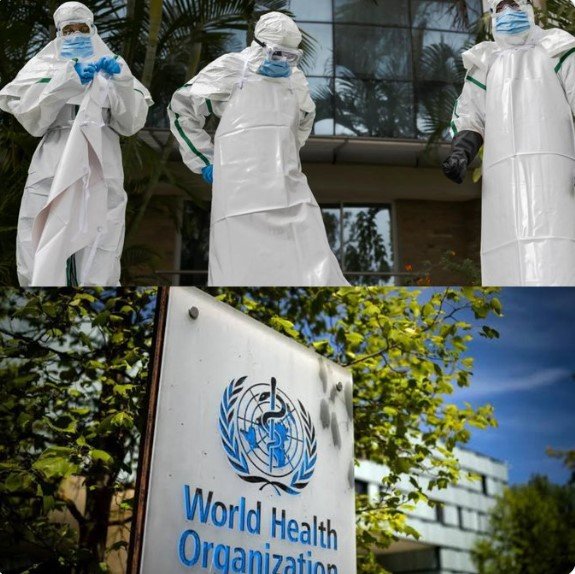
The World Health Organisation (WHO) has clarified that Nigeria has not been officially declared Ebola-free, despite having no confirmed case of the disease currently remaining in the country following the medical evacuation of the index patient to Switzerland.
The clarification followed the evacuation of Nigeria’s first confirmed Ebola patient in the current outbreak, a 42-year-old Swiss woman, who was flown out of Abuja alongside her husband on Monday, October 26, 2026, for further medical care and follow-up.
The WHO said the departure of the patient and her husband meant Nigeria had no confirmed Ebola case within its borders at the time. However, the organisation stressed that the development did not amount to an official declaration that the outbreak had ended.
According to the organisation, health authorities are continuing to monitor 52 contacts who may have been exposed to the virus.
The clarification became necessary after reports circulated suggesting that Nigeria had been declared Ebola-free following the evacuation. The WHO rejected that interpretation, insisting that the country must complete the required monitoring period before its Ebola-free status can be confirmed.
WHO Explains Why Nigeria Has Not Been Declared Ebola-Free
The WHO Nigeria office explained that the absence of confirmed cases following the evacuation does not automatically mean that the country has met the conditions required to declare an Ebola outbreak over.
Under international public health guidelines, the end of an Ebola outbreak is generally declared after a 42-day period without new cases, calculated according to established criteria following the last confirmed case.
In the present situation, the evacuation of the confirmed patient means that the relevant countdown must still be observed, alongside continued monitoring of people who may have been exposed.
The organisation also emphasised the importance of heightened surveillance after the countdown to identify any possible infections that may not have been detected earlier.
The WHO’s clarification was intended to prevent misleading interpretations of the announcement that Nigeria currently had no confirmed Ebola cases.
Although the evacuation represents an important development in the country’s response, public health officials have maintained that surveillance and contact tracing remain necessary.
Nigeria Continues Monitoring 52 Contacts
Despite the patient’s departure, Nigeria’s public health response remains active, with authorities continuing to monitor 52 contacts linked to the confirmed infection.
The contacts include people who may have had direct or indirect exposure to the patient before her evacuation. Such monitoring is a standard part of outbreak control and helps health officials identify possible infections early.
The patient’s husband, who was also evacuated to Switzerland, had been identified as a contact and was reportedly without symptoms at the time of the transfer.
The WHO said Swiss health authorities would assume responsibility for the continued medical management of the patient and the follow-up of her husband, while Nigerian authorities would maintain surveillance of the remaining contacts in the country.
Contact tracing is particularly important in Ebola outbreaks because the virus can spread through direct contact with the blood or other bodily fluids of an infected person, as well as contaminated materials.
Health officials must therefore establish who may have been exposed, monitor those individuals for symptoms and arrange testing or isolation where necessary.
The continued monitoring of the identified contacts is intended to reduce the risk of further transmission and ensure that any new suspected case is detected promptly.
How Nigeria’s Ebola Case Was Confirmed
Nigeria confirmed its first Ebola case in more than a decade on October 20, 2026, after laboratory testing detected the Bundibugyo virus in a 42-year-old Swiss woman.
The patient had travelled from Uganda to Nigeria and subsequently developed symptoms. She was admitted for medical attention before the infection was confirmed through laboratory investigations.
Her case prompted the activation of emergency public health measures, including isolation, contact identification, surveillance and coordination among relevant health authorities.
The Nigeria Centre for Disease Control and Prevention (NCDC) also intensified its response, working with the Federal Ministry of Health and Social Welfare, state authorities and international partners to contain the infection.
The Bundibugyo virus is one of the viruses that cause Ebola disease. It is distinct from the Zaire ebolavirus responsible for several of the world’s best-known Ebola outbreaks.
The confirmation of the infection in Nigeria raised concerns because of the potentially severe nature of Ebola disease and the possibility of transmission through close contact.
However, the prompt identification and isolation of a confirmed case, followed by contact tracing and medical management, are central measures used to limit the spread of the virus.
Authorities have continued to investigate the circumstances surrounding the infection, including how the patient may have contracted the virus.
Patient Stabilised Before Medical Evacuation
Nigeria’s Coordinating Minister of Health and Social Welfare, Professor Muhammad Ali Pate, confirmed the patient’s departure from Abuja on Monday.
According to the minister, the patient had improved clinically before the evacuation. She was described as stable, conscious and able to communicate, while her laboratory results were reported to be moving towards baseline levels.
Nigerian medical personnel managed her condition before arrangements were completed for her transfer to Switzerland.
The evacuation was carried out by air ambulance under medical supervision, with the patient’s husband accompanying her.
The WHO Regional Director for Africa, Professor Mohamed Janabi, commended the Nigerian government, medical personnel, emergency responders and partner organisations involved in managing the case.
The evacuation transferred responsibility for the patient’s continued treatment to Swiss health authorities. It did not, however, remove the need for Nigeria to monitor people who might have been exposed before her departure.
Health authorities have also cautioned against assuming that clinical improvement automatically means a patient is no longer infectious. Decisions about infection risk must be based on medical assessments and relevant public health protocols.
What the 42-Day Countdown Means
The 42-day period is an important benchmark in determining when an Ebola outbreak can officially be declared over.
The period corresponds to twice the maximum 21-day incubation period generally associated with Ebola virus disease. It is designed to provide time for infections arising from the last known transmission event to become apparent.
The countdown must follow the applicable public health criteria, including the required negative test results or other circumstances recognised under outbreak-management guidance.
In Nigeria’s case, the evacuation of the confirmed patient has changed the immediate situation because no confirmed case remains in the country. Nevertheless, the authorities must continue the prescribed monitoring process and ensure that potential transmission chains are addressed.
The 42-day period should not be interpreted as a guarantee that transmission is impossible once it ends. This is why public health authorities recommend additional surveillance after an outbreak is declared over.
The process also highlights the difference between reporting zero active confirmed cases and officially declaring a country Ebola-free.
The first describes the known situation at a particular time. The second is a formal public health determination made after specified conditions have been satisfied.
Government and Health Authorities Urged to Maintain Vigilance
The WHO’s clarification underscores the need for Nigerian authorities to sustain their response even after the evacuation.
Health officials are expected to continue following up on identified contacts, assess suspected symptoms, reinforce infection prevention measures and communicate accurate information to the public.
Members of the public should rely on announcements from the NCDC, the Federal Ministry of Health and Social Welfare, and the WHO for verified updates on the situation.
People who have been formally identified as contacts should cooperate with public health officials and follow the instructions provided to them.
The public should also avoid spreading unverified claims that Nigeria has been declared Ebola-free, as such reports could create a false impression that monitoring and other protective measures are no longer necessary.
At the same time, the absence of confirmed cases after the evacuation should be reported accurately. It is an important development in the response, but it should not be confused with confirmation that all potential risks have disappeared.
Conclusion
Nigeria currently has no confirmed Ebola case remaining in the country following the evacuation of the index patient and her husband to Switzerland on October 26, 2026.
However, the World Health Organisation has made it clear that Nigeria has not been officially declared Ebola-free.
Health authorities are continuing to monitor 52 contacts linked to the case, while Switzerland has assumed responsibility for the patient’s continued treatment and the follow-up of her husband.
The next steps include completing the applicable 42-day monitoring period, maintaining surveillance and ensuring that any suspected infection is promptly investigated.
For now, the evacuation marks a significant development in Nigeria’s Ebola response, but the country must continue to follow established public health procedures before an official declaration that the outbreak has ended can be made.