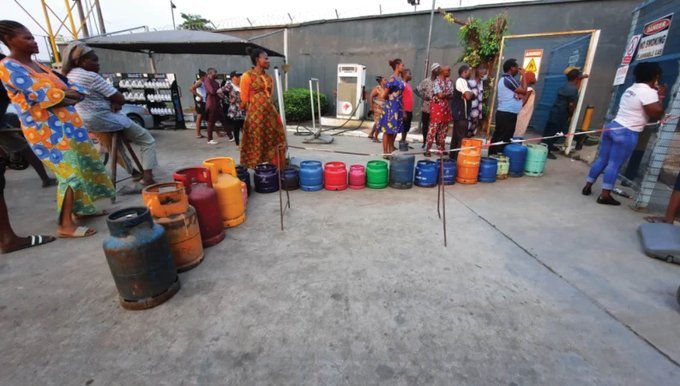
The price of cooking gas, also known as Liquefied Petroleum Gas (LPG), has surged to around ₦1,500 per kilogram in Nigeria, marking a sharp increase that is further straining household budgets across the country.
The latest spike represents a significant jump from earlier price levels recorded in 2026, when LPG was selling between ₦1,000 and ₦1,400 per kilogram in many locations.
Rapid Price Increase in Recent Months
Market trends indicate that cooking gas prices have been on a steady upward trajectory since the beginning of the year.
- In January 2026, the average retail price hovered around ₦1,000 per kg
- By February, prices rose to between ₦1,200 and ₦1,300 per kg in several states
- In early March, rates climbed further to about ₦1,400 per kg in major cities
The current rise to approximately ₦1,500 per kg signals a continued upward trend, raising fresh concerns about affordability and access.
Impact on Households
The increase in LPG prices is having a direct and immediate impact on everyday living costs across Nigeria.
For example:
- A 12.5kg cylinder, commonly used by households, could now cost close to ₦18,750
- Smaller cylinders (3kg or 6kg) are also becoming significantly more expensive
This comes at a time when many Nigerians are already grappling with inflation, high food prices, and rising transportation costs.
Energy analysts warn that continued increases could force low-income households to revert to alternative cooking methods such as firewood and charcoal, which pose both environmental and health risks.
Key Drivers of the Price Surge
Several factors are contributing to the sharp rise in cooking gas prices:
1. Global Supply Pressures
Disruptions in international energy markets have pushed up the cost of LPG globally, affecting import-dependent countries like Nigeria.
2. Exchange Rate Challenges
The depreciation of the naira has increased the cost of importing LPG, translating into higher retail prices.
3. Transportation and Distribution Costs
Rising logistics costs continue to affect the final price paid by consumers, especially in inland regions.
4. Domestic Supply Constraints
Despite being a gas-producing nation, Nigeria still faces infrastructure and distribution challenges that limit the availability of LPG locally.
Regional Price Differences
Cooking gas prices are not uniform across the country.
- Urban and coastal areas with better supply chains tend to have relatively lower prices
- Northern and remote regions often pay more due to transportation costs
This disparity means some consumers are already paying above the ₦1,500/kg benchmark in certain locations.
Economic and Social Implications
The continued rise in LPG prices carries serious implications:
- Higher Cost of Living: Increased energy costs contribute to inflation
- Health Concerns: A shift to firewood and charcoal can lead to respiratory issues
- Environmental Impact: Increased use of traditional fuels contributes to deforestation
- Business Strain: Food vendors and small businesses face rising operating costs
Experts warn that if the trend continues, it could reverse progress made in promoting clean cooking energy.
Calls for Government Intervention
Stakeholders in the energy sector have called for urgent action from the government to stabilize prices.
Suggested measures include:
- Expanding domestic gas production
- Improving storage and distribution infrastructure
- Encouraging private sector investment
- Providing targeted support for vulnerable households
There are also calls to strengthen policies that promote local refining and reduce dependence on imports.
Outlook
Short-term relief appears uncertain, as global and domestic factors continue to exert pressure on prices.
However, analysts believe that with the right policies—particularly increased local production and improved logistics—prices could stabilize over time.
Conclusion
The rise of cooking gas prices to ₦1,500 per kilogram highlights the growing energy affordability challenge in Nigeria.
As households struggle to cope with rising costs, the situation underscores the urgent need for sustainable solutions to ensure access to clean and affordable cooking energy.
For millions of Nigerians, the cost of cooking is no longer just a routine expense—it is becoming a major financial burden.