The Federal Government has announced plans to commence the gradual phase-out of electricity subsidies from 2027 as part of ongoing reforms aimed at restoring the financial sustainability of Nigeria’s power sector and attracting greater private sector investment.
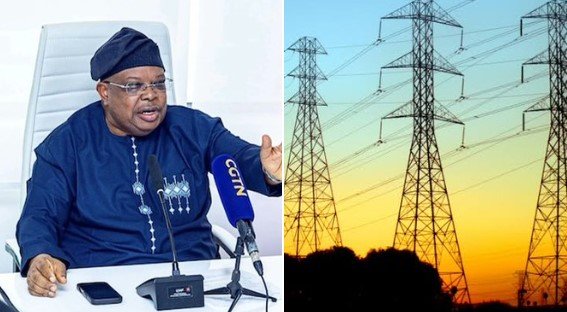
Minister of Power, Joseph Olasunkanmi Tegbe, disclosed the plan on Friday, saying the government would begin transitioning away from broad electricity subsidies while implementing targeted interventions to cushion the impact on vulnerable Nigerians.
The announcement signals another major step in the Federal Government’s efforts to address the long-standing financial challenges facing Nigeria’s electricity industry, where subsidy payments have continued to place significant pressure on public finances despite persistent concerns over inadequate power supply.
Government Seeks Sustainable Electricity Market
According to the minister, the decision forms part of the administration’s broader strategy to establish a commercially viable electricity market capable of attracting investments across generation, transmission and distribution.
He explained that while government intervention has played a role in keeping electricity tariffs below actual production costs, the current subsidy regime has become increasingly unsustainable.
Tegbe noted that transitioning towards cost-reflective tariffs would improve market liquidity, strengthen investor confidence and create the financial conditions necessary for expanding electricity infrastructure across the country.
The minister stressed that the proposed reforms are not intended to impose unnecessary hardship on Nigerians but rather to create a power sector capable of delivering reliable electricity over the long term.
Subsidy Removal to Be Gradual
Rather than an immediate withdrawal, the Federal Government said the electricity subsidy would be phased out gradually beginning in 2027.
Officials say the gradual implementation is designed to allow consumers, electricity distribution companies and other stakeholders sufficient time to adjust to the new pricing framework.
The government also indicated that social protection measures would accompany the transition to reduce the impact on low-income households.
Although specific implementation guidelines have yet to be released, authorities said additional details on the timeline, tariff structure and targeted support mechanisms would be made public before the commencement of the policy.
Electricity Subsidies Have Cost Government Billions
Nigeria has spent hundreds of billions of naira annually subsidising electricity tariffs to bridge the gap between the actual cost of producing and distributing electricity and the amount consumers pay.
The subsidy has largely arisen because electricity tariffs approved by the regulator have historically fallen below the cost-reflective level required by operators to recover investments and operating expenses.
As a result, the Federal Government has repeatedly intervened through budgetary allocations to settle market shortfalls owed to generation companies (GenCos), transmission operators and other participants in the Nigerian Electricity Supply Industry.
Industry experts have consistently warned that continued reliance on government subsidies has contributed to liquidity challenges, discouraged investment and slowed improvements in electricity supply.
Reform Builds on Electricity Act 2023
The planned subsidy phase-out aligns with the implementation of the Electricity Act 2023, one of the most significant reforms of Nigeria’s electricity sector in decades.
The legislation decentralised aspects of electricity regulation by empowering states to establish their own electricity markets while opening opportunities for increased private investment.
The law also seeks to promote competition, improve efficiency and accelerate investments across electricity generation, transmission and distribution.
Since the Act came into force, several states have begun establishing independent electricity regulatory commissions to oversee electricity markets within their jurisdictions.
The Federal Government believes these reforms will create a more competitive and financially sustainable electricity industry.
Tegbe Outlines Priorities
Since assuming office as Minister of Power in June 2026, Joseph Olasunkanmi Tegbe has identified improving liquidity within the electricity market as one of his major priorities.
Other priorities include increasing power generation capacity, strengthening transmission infrastructure, expanding electricity access and improving operational efficiency across the sector.
The minister has repeatedly argued that achieving reliable electricity supply requires financially healthy market participants capable of investing in infrastructure upgrades and network expansion.
According to him, attracting long-term investment will require policy consistency and pricing structures that reflect actual market realities.
Challenges Facing Nigeria’s Electricity Sector
Nigeria’s power sector continues to face multiple structural challenges despite years of reforms.
Installed electricity generation capacity remains significantly higher than the amount of electricity actually delivered to consumers because of transmission bottlenecks, gas supply constraints, inadequate infrastructure and liquidity problems.
Distribution companies also continue to grapple with high technical, commercial and collection losses, while electricity consumers frequently complain about estimated billing, poor service delivery and prolonged outages.
Although tariff adjustments have been introduced in recent years for certain customer categories, many consumers continue to receive electricity at rates supported by government subsidies.
Industry analysts argue that without addressing these financial imbalances, investments needed to modernise the sector may remain insufficient.
Investors Seek Market Stability
Private investors have consistently emphasised the need for a financially sustainable electricity market before committing substantial new investments.
Generation companies have repeatedly raised concerns over outstanding debts arising from market shortfalls, while distribution companies have argued that inadequate revenue affects their ability to improve infrastructure.
Experts believe that gradually moving toward cost-reflective tariffs could improve investor confidence provided the reforms are accompanied by stronger regulation, improved service delivery and transparent implementation.
They also stress that tariff increases should be linked to measurable improvements in electricity supply to maintain public confidence.
Consumer Concerns
The announcement is expected to generate mixed reactions among electricity consumers already facing rising living costs.
Many households and businesses have expressed concerns about higher electricity bills, particularly amid broader economic reforms that have affected transportation, food prices and household expenses.
Consumer advocacy groups have repeatedly maintained that tariff adjustments should only follow demonstrable improvements in power supply.
Small businesses, manufacturers and artisans have also called for stable electricity as a means of reducing dependence on expensive diesel and petrol generators.
Many industry stakeholders argue that improved electricity supply would ultimately lower operating costs for businesses despite higher tariffs.
Government Promises Protection for Vulnerable Nigerians
Federal Government officials insist that vulnerable households will remain protected during the transition.
Rather than maintaining blanket subsidies that benefit all electricity consumers regardless of income level, the government plans to adopt targeted interventions focusing on those most in need.
Although details are still being developed, such measures could include social protection programmes or targeted electricity support for eligible households.
Authorities say the objective is to balance fiscal sustainability with social welfare while ensuring that electricity providers receive adequate revenue to improve service delivery.
Electricity Sector Expected to Undergo Further Reforms
The planned subsidy phase-out is likely to be accompanied by additional reforms across the electricity value chain.
Government officials have consistently indicated that expanding generation capacity alone will not solve Nigeria’s electricity challenges unless transmission and distribution infrastructure are also upgraded.
The Federal Government has continued investments in transmission projects while encouraging greater private sector participation across the industry.
Stakeholders believe coordinated reforms involving regulators, investors, state governments and electricity consumers will be critical to achieving sustainable improvements in electricity supply.
Looking Ahead
The Federal Government’s decision to begin phasing out electricity subsidies from 2027 represents another significant milestone in Nigeria’s ongoing power sector reform programme.
While the policy aims to reduce the fiscal burden of electricity subsidies and strengthen the financial viability of the sector, its success will largely depend on careful implementation, transparent communication and adequate protection for vulnerable consumers.
For millions of Nigerians, the ultimate measure of the reforms will not simply be changes in electricity tariffs but whether they result in more reliable, affordable and consistent power supply capable of supporting economic growth, industrial development and improved living standards.
With implementation guidelines expected before 2027, attention will now focus on how the Federal Government balances market sustainability with consumer protection while pursuing its long-term objective of transforming Nigeria’s electricity sector into a commercially viable and investment-friendly industry.