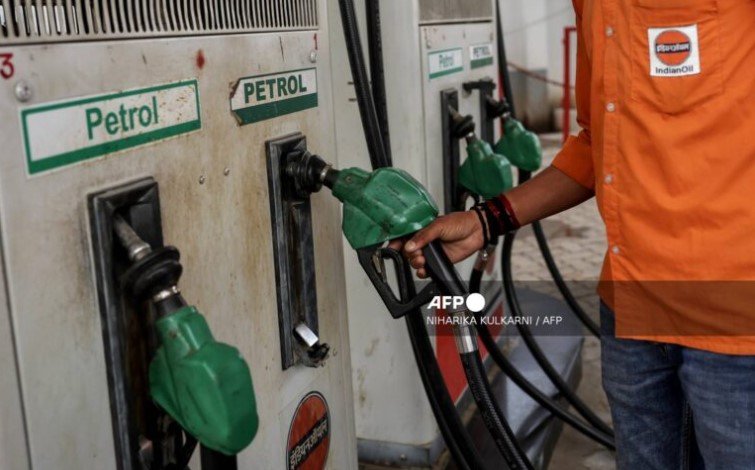
Fresh concerns have emerged over another increase in the price of Premium Motor Spirit, popularly known as petrol, as pump prices approach ₦1,500 per litre in parts of Nigeria following a fresh increase in the ex-depot price of the commodity.
The latest development followed Dangote Petroleum Refinery’s decision to increase its petrol gantry price from ₦1,265 to ₦1,350 per litre, representing an ₦85 increase or 6.7 per cent.
The new price took effect on Saturday, September 12, 2026, and has already triggered fresh adjustments at filling stations, particularly in Abuja and other inland markets.
Checks in Abuja showed that some major filling stations have increased their petrol prices to between ₦1,395 and ₦1,430 per litre, bringing the cost of the product significantly closer to the ₦1,500 mark.
The development has renewed concerns among motorists, transport operators, businesses and households over the potential impact of another petrol price increase on transportation costs, food prices and the general cost of living.
Dangote raises petrol price to ₦1,350
The latest adjustment by Dangote Refinery represents the fourth reported increase in its petrol gantry price since August 21, 2026.
The refinery initially raised its petrol price from ₦1,165 to ₦1,185 per litre on August 21.
Five days later, on August 26, the price was increased again to ₦1,200 per litre.
Another adjustment followed on August 29, when the price rose from ₦1,200 to ₦1,265.
The latest increase of ₦85 brought the price to ₦1,350 per litre.
In total, the refinery’s petrol gantry price has increased by ₦185 within 22 days, representing an overall rise of about 15.9 per cent during the period. (The Sun Nigeria)
The latest increase has consequently placed additional pressure on petrol marketers, who have begun adjusting their retail prices to reflect the higher cost of obtaining supplies.
Petrol sells above ₦1,400 in Abuja
The effect of the latest refinery price adjustment is already being felt at filling stations in Abuja.
Reports from the Federal Capital Territory showed that MRS filling stations increased their pump price from ₦1,350 to ₦1,395 per litre.
NIPCO outlets reportedly raised their price to ₦1,430 per litre, while Mobil stations increased their pump price to about ₦1,400 per litre.
The variations reflect differences in supply costs, transportation, operating expenses and individual marketers’ pricing decisions.
With some stations already selling petrol above ₦1,400 per litre, consumers are increasingly concerned that the product could reach ₦1,500 per litre if international crude oil prices remain elevated and logistics costs continue to rise.
The situation is particularly significant for Abuja and other inland markets because petroleum products have to be transported over long distances from coastal supply points.
Rising crude oil prices add pressure
The latest petrol price increase is coming amid a sharp rise in international crude oil prices.
Brent crude, the global benchmark, has been trading above $100 per barrel amid heightened geopolitical tensions in the Middle East.
Reports put Brent at around $108 per barrel at one point, while Nigeria’s Bonny Light has also traded above the $100 mark.
Higher crude oil prices increase the cost of producing and supplying refined petroleum products, creating additional pressure throughout the downstream petroleum market.
Industry stakeholders have consequently warned that sustained increases in global crude prices could result in further petrol price adjustments in Nigeria.
An industry expert, Olatide Jeremiah, the Chief Executive Officer of Petroleumprice.ng, said the latest development was connected to the increase in international oil prices and freight costs.
He warned that petrol prices could reach ₦1,500 per litre in major Nigerian cities if the Middle East crisis persists and crude oil prices remain elevated. (The Sun Nigeria)
Logistics costs worsen the situation
Transportation and logistics costs are another major factor behind the different petrol prices being recorded across the country.
While coastal states such as Lagos, Rivers and Delta have relatively closer access to refineries, terminals and other petroleum supply points, inland markets such as Abuja depend heavily on road transportation to move petroleum products from coastal locations.
The cost of trucking, freight, handling and distribution is therefore added to the price paid by consumers.
This helps explain why petrol prices can differ considerably between Lagos and Abuja, even when marketers are sourcing products from the same broad supply market.
Northern markets are expected to face additional pressure because of the longer distances involved in transporting petrol from coastal areas.
Industry estimates suggest that pump prices in some northern cities could rise to between ₦1,450 and ₦1,600 per litre depending on supply costs and availability.
Marketers express concern over frequent price changes
The latest development has also generated concern among petroleum marketers.
The National Publicity Secretary of the Independent Petroleum Marketers Association of Nigeria, Chinedu Ukadike, said successive price adjustments by Dangote Refinery were creating uncertainty for marketers and consumers.
Frequent changes make it difficult for marketers to determine the price at which they can sell existing stock while also preparing for the cost of replacing that stock.
A filling station operator in Abuja also indicated that consumers could face another adjustment when stations begin receiving new supplies purchased at the latest price.
This means that the price currently displayed at some stations may not necessarily represent the final price consumers will encounter after existing stocks are exhausted.
Petrol price increase could affect transportation
The potential impact of the latest petrol price increase extends beyond the filling station.
Petrol is a major input for commercial transportation across Nigeria, particularly for taxis, buses, tricycles and motorcycles.
An increase in pump prices raises operating costs for transport operators, who may subsequently increase fares to remain profitable.
Higher transportation costs can then affect the prices of food and other essential commodities because traders and distributors depend heavily on road transportation to move goods between farms, markets and urban centres.
The effect is likely to be more pronounced in locations far from major supply centres.
For households already dealing with elevated living costs, another increase in transportation and food expenses could place additional pressure on disposable income.
Businesses face higher operating costs
Businesses that depend on petrol-powered generators could also face increased operating expenses.
Although electricity supply remains a critical factor in determining the extent of generator use, many Nigerian businesses continue to rely on petrol and diesel generators to supplement public electricity.
A sustained increase in petrol prices could therefore increase production and operating costs for small businesses, retailers, service providers and other enterprises.
Higher costs may eventually be transferred to consumers through increased prices for goods and services.
Economists have consequently warned that another significant increase in energy costs could slow the pace of improvement in inflation and place additional pressure on households.
Seven-day average petrol price above ₦1,300
The latest market data also illustrate the upward pressure in the downstream petroleum sector.
The Energy Bulletin by the Industry Competency Centre put the seven-day average domestic petrol price at ₦1,308.33 per litre.
The bulletin also reported a seven-day average diesel price of ₦1,855.97 per litre.
Its seven-day average Brent crude price stood at $98.74 per barrel, while Bonny Light averaged $104.65 per barrel.
The average exchange rate during the period was put at ₦1,323.12 to the dollar. (The Sun Nigeria)
The figures demonstrate the combination of international oil prices, exchange-rate conditions and domestic distribution costs influencing the Nigerian downstream petroleum market.
Calls for government intervention grow
The latest petrol price increase has renewed calls for the Federal Government to consider measures that could cushion the effect of rising energy costs on households and businesses.
However, the debate has shifted from a return to the former universal petrol subsidy to the possibility of targeted intervention for vulnerable Nigerians.
The Centre for the Promotion of Private Enterprise recently estimated that restoring a universal petrol subsidy could cost the Federal Government about ₦19.16 trillion annually at current consumption levels.
The organisation instead advocated targeted relief measures to protect vulnerable households from the effects of rising petrol prices. (Streamline)
The argument reflects the broader debate surrounding Nigeria’s decision to end the petrol subsidy and allow market forces to play a greater role in determining pump prices.
Subsidy removal and market pricing
Nigeria’s downstream petroleum market has undergone significant changes since the removal of the petrol subsidy.
Under the current market-oriented system, changes in international crude prices, foreign exchange conditions, refinery costs, transportation expenses and supply dynamics can influence the price paid by consumers.
The Dangote Refinery has emerged as a major domestic source of refined petrol, reducing Nigeria’s dependence on imported products.
However, domestic refining does not completely insulate consumers from international oil-market movements.
Crude oil remains a major input in refining, while logistics, foreign exchange and other costs continue to influence the final price of petroleum products.
Consequently, a significant rise in international crude prices can still translate into higher domestic petrol prices.
N1,500 petrol price remains a possibility
With some Abuja filling stations already selling petrol for ₦1,430 per litre, the ₦1,500 mark is no longer far away.
However, reaching ₦1,500 nationwide is not inevitable.
Pump prices vary between locations and individual filling stations, and the final retail price depends on the cost at which marketers obtain products, transportation expenses, operating costs and profit margins.
The current evidence shows that the price is approaching ₦1,500 in some inland markets rather than that every filling station in Nigeria is already selling at that level.
The distinction is important because petrol prices continue to vary significantly across the country.
What motorists should expect
Motorists are likely to continue monitoring filling stations for further adjustments as new supplies enter the market.
Marketers who purchased earlier stocks may temporarily sell below the latest replacement cost, while stations receiving fresh supplies may reflect the higher price more quickly.
This could result in different pump prices even among filling stations located within the same city.
Consumers may therefore see further price adjustments in the coming days if the cost of petrol at the supply end remains elevated.
Outlook for petrol prices
The immediate outlook for petrol prices will depend largely on international crude oil prices, domestic refining costs, logistics expenses and supply conditions.
If global oil prices remain above $100 per barrel for an extended period, pressure on domestic petrol prices could persist.
On the other hand, any sustained decline in crude prices could ease some of the pressure on the downstream market.
For now, however, the latest ₦85 increase by Dangote Refinery has already translated into higher pump prices in parts of the country.
With petrol selling for as much as ₦1,430 per litre at some Abuja outlets, concerns are growing that consumers could soon see prices closer to ₦1,500 per litre, particularly if crude oil prices and transportation costs continue to rise.
The development represents another test for Nigerian households and businesses still adjusting to the realities of a deregulated downstream petroleum market.