ABUJA — Nigeria’s House of Representatives has sounded the alarm over a credible terrorist threat targeting the National Assembly Complex in Abuja, warning that such an attack could cripple the nation’s democracy and destabilise governance at the highest level.
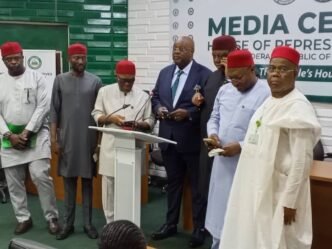
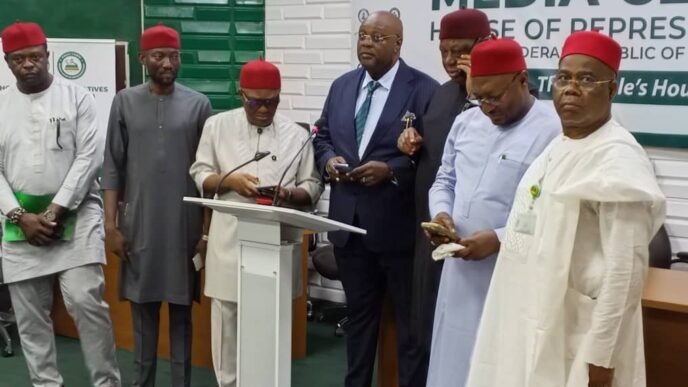
The shocking revelation came during a public hearing on Tuesday, where lawmakers deliberated on a new bill seeking to establish a Legislative Security Directorate — a specialised unit designed to safeguard the federal legislature and its members.
According to the Chairman of the House Committee on Internal Security, Hon. Garba Ibrahim Muhammad, intelligence reports indicated that terrorists had made explicit threats to bomb the National Assembly Complex, prompting urgent calls for institutional reforms to strengthen the security of the legislative arm.
“We have received direct threats to bomb the National Assembly”
Hon. Muhammad disclosed during the hearing that the threat was not speculative but based on verified intelligence gathered by security agencies. He said the House received credible information that terrorist elements were planning coordinated attacks on strategic public buildings, with the National Assembly listed as one of their primary targets.
“We have received threats from terrorists to bomb the National Assembly Complex,” Muhammad stated gravely. “Beyond these threats, there are also recurring issues of unauthorised access, theft of vehicles and motorcycles, and inadequate screening of visitors within the premises.”
The revelation sent shockwaves through the lower chamber, with several lawmakers expressing concern over their personal safety and that of legislative staff, aides, and visitors who frequent the complex daily.
A Symbol of Democracy Under Threat
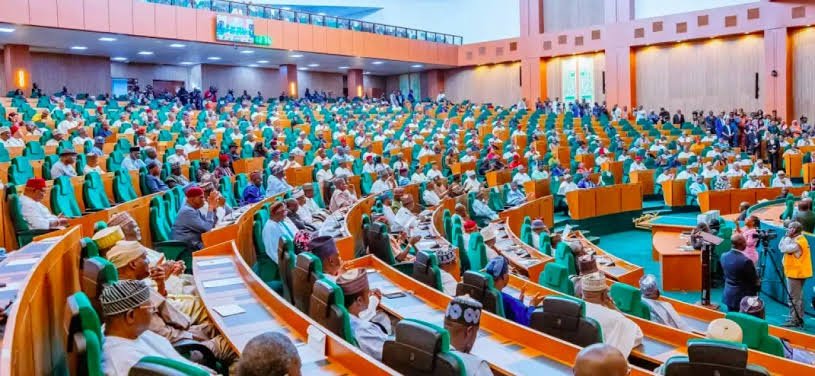
The National Assembly Complex, which houses both the Senate and House of Representatives, is not only the centre of lawmaking in Nigeria but also a powerful symbol of the country’s democratic sovereignty.
Any successful attack, security analysts say, would deal a devastating blow to Nigeria’s democracy and institutional stability.
Muhammad underscored this risk during the hearing, saying:
“If activities are thwarted, there will be no representation, no oversight, no annual budget, no plenary at all — and that will destabilise legislative procedure, democracy, and the nation at large.”
The lawmaker warned that failure to take swift, proactive measures could expose the legislature to grave dangers, given Nigeria’s wider security challenges involving insurgency, banditry, and terrorism.
Past Warnings and Security Vulnerabilities
This is not the first time the National Assembly has faced such security threats. In 2021, lawmakers reportedly received intelligence alerts suggesting that the Boko Haram terrorist group was planning to infiltrate and attack the complex.
That incident led to heightened screening and stricter entry protocols at the gates, but security experts have repeatedly described the facility as a “soft target” due to its accessibility and large daily foot traffic.
Over the years, incidents of unauthorised entry, theft, and even assault have been reported within the legislative grounds — exposing systemic gaps in the building’s security architecture.
A senior security officer who spoke under condition of anonymity said that while personnel of the Department of State Services (DSS), Nigeria Police, and civil defence corps provide security at the complex, there is no central command or uniform chain of command specifically tailored to the National Assembly.
“The security units operate independently, which sometimes slows response time and complicates coordination,” the source said. “A dedicated security directorate could address these gaps.”
The Push for a Legislative Security Directorate
In response to the latest threat, the House Committee on Internal Security is championing a bill titled: “A Bill for an Act to Provide for the Establishment and Functions of the Legislative Security Directorate in the National Assembly (HB 1632).”
The proposed law seeks to create an independent, professionalised security outfit under the direct supervision of the National Assembly management.
If passed, the directorate would be responsible for:
- Conducting intelligence and threat assessments specific to the National Assembly;
- Screening and accreditation of visitors, contractors, and vehicles;
- Coordinating with national security agencies;
- Managing access control, emergency responses, and surveillance systems;
- Ensuring safety of legislators, staff, and assets within the complex.
Muhammad explained that while the National Assembly remains open to the public as the people’s institution, “openness should not translate to vulnerability.”
“The establishment of this directorate is not about shutting people out, but about ensuring that the legislature operates in a secure and controlled environment,” he said.
Security Analysts Support the Move
Security experts have backed the proposed legislation, describing it as long overdue.
Dr. Kabiru Adamu, a security risk consultant, noted that the National Assembly’s current security arrangement is reactive and fragmented. He said Nigeria’s parliament — as one of the three arms of government — should have a distinct security infrastructure similar to that of the judiciary and executive.
“The United States Capitol has its own police department. The British Parliament has a separate security directorate. Nigeria’s National Assembly should not be any different,” Adamu said.
He emphasised that the move should not only focus on physical security but also integrate cyber intelligence, counter-surveillance, and advanced access control technologies.
Lawmakers Express Concern Over Rising Insecurity
Several lawmakers took turns to express their concern over the worsening insecurity across the country and its spillover into the heart of government.
One legislator, who requested anonymity, said, “If terrorists can threaten to bomb the National Assembly and we treat it with levity, then we are in trouble. This is not just about us; it’s about the stability of the nation.”
Another lawmaker from the North-East region noted that threats of this nature should serve as a wake-up call for the government to reassess its counterterrorism strategy.
“We need a whole-of-government approach,” he said. “The legislature, executive, and security agencies must collaborate to protect democratic institutions.”
Background: Nigeria’s Mounting Security Challenges
Nigeria continues to grapple with multifaceted security crises. From Boko Haram and Islamic State West Africa Province (ISWAP) insurgents in the North-East to banditry and kidnapping in the North-West and Central regions, the threats have expanded in scale and sophistication.
The recent upsurge in attacks on government installations, military outposts, and public infrastructure underscores the audacity of non-state actors.
In September 2025, intelligence reports revealed that terrorist networks were attempting to re-establish sleeper cells within major cities, including Abuja. The National Security Adviser’s office later confirmed that security agencies had disrupted several plots aimed at key government facilities.
What Happens Next
Following the disclosure, the House of Representatives has vowed to expedite action on the Legislative Security Directorate Bill.
Speaker of the House, Rt. Hon. Tajudeen Abbas, has directed the Committee on Internal Security and the House Committee on Rules and Business to prioritise the bill for accelerated consideration.
The management of the National Assembly, led by the Clerk to the National Assembly, has also been directed to strengthen interim security measures, including stricter entry protocols, identity verification, and surveillance upgrades.
In the coming days, both chambers of the National Assembly are expected to hold a joint security briefing with the Department of State Services (DSS), Nigerian Police Force, and Defence Headquarters to evaluate the threat level and align on next steps.
Public Reaction and Implications
The news of the terrorist threat has sparked widespread concern among Nigerians, especially given the National Assembly’s symbolic role as the pillar of the nation’s democracy.
Citizens and civil society groups have urged the federal government to take immediate and transparent steps to fortify the institution, while ensuring that legislative openness and public participation are not undermined.
Political analysts warn that any successful attack on the National Assembly would have far-reaching consequences, potentially paralysing governance, disrupting the national budget cycle, and shaking public confidence in the state’s ability to protect itself.
Conclusion
The reported terrorist threat to bomb the National Assembly Complex underscores the grave security realities confronting Nigeria. For lawmakers, the disclosure serves as both a warning and a call to action — to protect not just their lives, but the democratic institution they represent.
As the House moves to pass the Legislative Security Directorate Bill, all eyes will be on how swiftly Nigeria can translate legislative intent into operational security reforms. The safety of the nation’s highest lawmaking body — and the stability of its democracy — may depend on it.
This is a developing story and will be updated as more information becomes available.