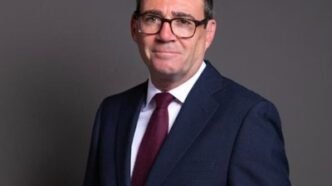
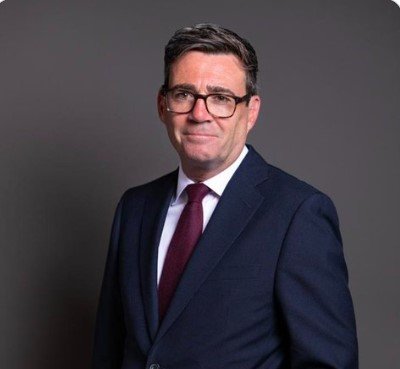
LONDON, United Kingdom — Andy Burnham has officially become the Prime Minister of the United Kingdom after being invited by King Charles III to form a new government following the resignation of Sir Keir Starmer. Burnham’s appointment marks a significant political transition, making him Britain’s seventh prime minister in just over a decade amid continued changes at the top of UK politics.
The 56-year-old Labour leader formally assumed office on Monday after a constitutional audience with King Charles at Buckingham Palace. Shortly afterward, he arrived at 10 Downing Street to deliver his first address as Prime Minister, outlining an ambitious agenda focused on economic recovery, decentralisation of power, public service reform and tackling the cost-of-living crisis.
Burnham Takes Office After Starmer Steps Down
Burnham succeeds Sir Keir Starmer, who resigned after just over two years as Prime Minister despite leading Labour to a landslide general election victory in 2024.
Before Burnham’s appointment, Starmer travelled to Buckingham Palace to formally tender his resignation to King Charles, in keeping with British constitutional convention. The monarch then invited Burnham to form a government, officially making him the country’s new Prime Minister.
The smooth transfer of power reflected the United Kingdom’s parliamentary system, under which the monarch appoints the individual most likely to command the confidence of the House of Commons.
From Greater Manchester Mayor to Prime Minister
Andy Burnham’s rise to Britain’s highest political office follows a lengthy career in public service.
Before becoming Prime Minister, Burnham served as Mayor of Greater Manchester, where he built a national profile through campaigns for greater regional powers, improved public transport, NHS reforms and increased investment outside London.
Earlier in his political career, he held several senior Cabinet positions under previous Labour governments, including Health Secretary and Culture Secretary.
Burnham returned to Westminster after securing the Labour Party leadership with overwhelming backing from Labour Members of Parliament, paving the way for his appointment as Prime Minister.
Labour Chooses a New Leader
Burnham became Labour Party leader after securing overwhelming support from Labour lawmakers.
His emergence as party leader followed internal political developments within Labour that culminated in Starmer’s resignation.
The leadership transition positioned Burnham to automatically become Prime Minister because Labour remained the governing party with a parliamentary majority in the House of Commons.
Unlike a general election, no nationwide public vote was required because the governing party retained its majority in Parliament.
Burnham’s First Speech at Downing Street
Standing outside Number 10 Downing Street shortly after taking office, Burnham promised to usher in what he described as a “new chapter” for Britain.
He unveiled plans for a 10-year national renewal programme aimed at rebuilding public confidence in government, addressing the cost-of-living crisis, revitalising British industry, expanding regional economic development and reducing homelessness.
Burnham also pledged to decentralise decision-making by transferring greater powers from Westminster to regional and local authorities, an issue he championed throughout his time as Mayor of Greater Manchester.
He said his government would prioritise practical solutions to improve living standards while restoring trust in politics.
Economic Challenges Await New Government
Burnham assumes office at a time when the United Kingdom continues to face significant economic and political challenges.
Among the immediate issues confronting his administration are:
- Rising cost-of-living pressures;
- Sluggish economic growth;
- Pressures on the National Health Service (NHS);
- Housing shortages;
- Regional inequality;
- Public service funding; and
- International geopolitical uncertainty.
Analysts say Burnham’s administration will be judged largely on its ability to improve economic conditions while maintaining fiscal discipline.
His government is also expected to focus on strengthening Britain’s industrial base and accelerating regional development outside London.
Cabinet Reshuffle Signals New Direction
One of Burnham’s first major decisions as Prime Minister was to begin reshaping the Cabinet.
Several senior ministers from the previous administration left government as Burnham assembled his own leadership team.
Among the high-profile departures was Chancellor Rachel Reeves, who announced her resignation following Burnham’s appointment and expressed support for the incoming administration.
Other senior figures also exited the Cabinet as Burnham sought to establish a government reflecting his own priorities and leadership style.
Political observers view the reshuffle as an indication that Burnham intends to put his own stamp on the Labour government rather than simply continuing the previous administration unchanged.
A Historic Political Moment
Burnham’s appointment represents another milestone in a period of extraordinary political turnover in Britain.
Since the Brexit era, the United Kingdom has experienced frequent changes in national leadership, making Burnham the seventh Prime Minister within a decade.
His appointment also makes him the fourth Prime Minister to serve during King Charles III’s reign, highlighting the rapid pace of political change in recent years.
The transition underscores both the flexibility of Britain’s parliamentary democracy and the continuing political realignment that has characterised British politics over the past decade.
International Attention
World leaders have begun congratulating Burnham following his appointment.
The transition has attracted international attention as governments assess the implications of Britain’s new leadership for foreign policy, trade, defence cooperation and international diplomacy.
Observers expect Burnham to maintain Britain’s commitments to NATO and existing international alliances while pursuing domestic economic reforms.
His government will also be expected to manage ongoing international challenges, including conflicts affecting global markets and energy security.
Reactions Across Britain
Political leaders from across the United Kingdom responded quickly to Burnham’s appointment.
Supporters welcomed his emphasis on regional development and social justice, expressing optimism that his experience in local government would translate into practical national reforms.
Opposition parties, meanwhile, congratulated Burnham while indicating they would closely scrutinise the policies of his administration.
Business groups, trade unions and civil society organisations also reacted to the leadership change, with many expressing hope that political stability would support economic confidence.
What Happens Next?
Following his formal appointment, Burnham is expected to complete the formation of his Cabinet before Parliament resumes full legislative business.
His government will then begin implementing its legislative agenda, including economic reforms, public service improvements and regional investment initiatives outlined during his leadership campaign.
Attention will also focus on the government’s first major policy announcements, budget priorities and legislative programme, which are expected to shape Britain’s political direction over the coming months.
Outlook
Andy Burnham’s appointment as Prime Minister marks the beginning of a new phase in British politics.
Having risen from regional leadership in Greater Manchester to the highest office in the United Kingdom, Burnham now faces the challenge of governing a country grappling with economic pressures, public service demands and evolving international realities.
His success will ultimately depend on whether his administration can deliver on promises to improve living standards, strengthen public services, stimulate economic growth and restore confidence in government.
For now, the peaceful constitutional transfer of power from Sir Keir Starmer to Andy Burnham marks another significant chapter in the United Kingdom’s parliamentary democracy, with the new Prime Minister taking office at a pivotal moment for both Britain and the governing Labour Party.