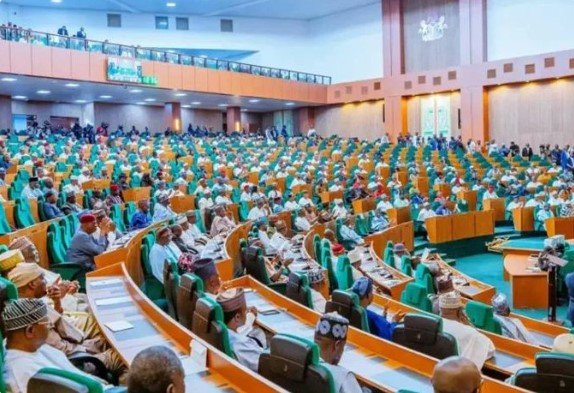
ABUJA, Nigeria — The House of Representatives has commenced detailed consideration of President Bola Tinubu’s executive bill seeking to establish state police, marking another major milestone in Nigeria’s ongoing constitutional reform process aimed at overhauling the country’s security architecture.
The House Committee on Constitution Review began a clause-by-clause examination of the proposed constitutional amendment on Monday, with lawmakers indicating that they would substantially adopt the version already approved by the Senate while making only limited adjustments where necessary.
The development signals growing consensus within the National Assembly on one of the most significant constitutional reforms since Nigeria returned to democratic rule in 1999.
House to Build on Senate’s Work
Deputy Speaker of the House of Representatives and Chairman of the House Committee on Constitution Review, Benjamin Kalu, said the Green Chamber would leverage the extensive work already completed by the Senate to accelerate the legislative process.
According to him, the committee would carefully study the Senate-approved draft and adopt its provisions wherever they align with the House’s objectives, introducing only necessary amendments where required.
Kalu noted that the objective is to ensure a harmonised constitutional amendment capable of addressing Nigeria’s growing internal security challenges without unnecessary duplication of legislative efforts.
The committee’s decision reflects increasing cooperation between both chambers of the National Assembly as they seek to produce a unified constitutional framework for state policing.
Why the House Reopened Debate
The current consideration follows the House’s earlier decision to withdraw its previously passed Constitution Alteration Bill on State Police.
Before the National Assembly proceeded on its recent recess, the House had independently passed its own constitutional amendment bill establishing state police.
However, after President Bola Tinubu transmitted an Executive Constitution Alteration Bill to the National Assembly, lawmakers resolved to rescind their earlier decision to allow consideration of the President’s comprehensive proposal.
The executive-sponsored legislation subsequently passed first and second readings in the House before being referred to the Committee on Constitution Review for detailed scrutiny.
Lawmakers explained that considering the executive bill instead of maintaining parallel proposals would eliminate conflicting versions and simplify the constitutional amendment process.
Tinubu’s Push for Security Reform
President Tinubu’s executive bill represents one of the administration’s most ambitious constitutional reform initiatives.
The proposal seeks to amend relevant provisions of the 1999 Constitution to establish a legal framework for state police services across Nigeria.
For decades, Nigeria has operated a centralised policing system under the Nigeria Police Force, with policing powers vested exclusively in the Federal Government.
Supporters of state police argue that the current arrangement has become increasingly inadequate in responding to the country’s diverse security threats, including terrorism, banditry, kidnapping, communal violence, oil theft and farmer-herder conflicts.
The Tinubu administration believes decentralising policing responsibilities would strengthen intelligence gathering, improve rapid response to crimes and enhance community policing across Nigeria’s 36 states.
The proposal also aligns with longstanding recommendations from several national conferences, constitutional review committees and security experts advocating policing reforms.
Senate Already Passed the Bill
The Senate had earlier concluded consideration of the constitutional amendment and approved its version of the state police bill after extensive deliberations.
With the House now indicating its willingness to substantially adopt the Senate’s draft, the possibility of a harmonised version emerging appears significantly stronger.
Should both chambers eventually pass identical versions of the constitutional amendment, the legislation would proceed to the next constitutional stage involving approval by at least two-thirds of Nigeria’s 36 State Houses of Assembly before it can be assented to by the President.
This constitutional requirement makes state-level legislative support a critical factor in determining whether the reform ultimately succeeds.
What State Police Would Mean
If eventually enacted, the constitutional amendment would fundamentally change Nigeria’s policing structure.
The proposal would empower states to establish and manage their own police services within constitutional guidelines while the Nigeria Police Force continues to operate at the federal level.
The reform is expected to create a dual policing structure similar to what exists in several federal countries.
Advocates argue that governors and local authorities possess better understanding of the peculiar security challenges within their respective states than a centrally controlled police force.
Supporters also believe state police would improve intelligence gathering because officers recruited locally would possess stronger knowledge of local communities, languages, cultures and geographical terrain.
They argue this would significantly strengthen crime prevention and emergency response.
Security Challenges Driving the Reform
Nigeria continues to face multiple security threats across different regions.
The North-East has battled insurgency for over a decade, while North-West states continue to confront armed banditry and mass kidnappings.
Several North-Central communities have experienced recurring communal violence and attacks linked to farmer-herder conflicts.
Meanwhile, parts of the South-East continue to witness separatist-related insecurity, while crude oil theft and pipeline vandalism remain persistent concerns in the Niger Delta.
Security experts have repeatedly argued that Nigeria’s centrally controlled police structure has struggled to effectively respond to these diverse threats because operational decisions often originate from Abuja.
Many analysts believe decentralised policing could improve response times and intelligence-driven operations.
Support and Concerns
The proposal has generated widespread debate across Nigeria.
Several governors, traditional rulers, civil society organisations and security experts have endorsed the creation of state police, describing it as overdue.
Many believe state policing would enhance accountability, improve community engagement and reduce the burden on federal security agencies.
However, critics have continued to express concerns over possible political abuse.
Opponents fear that governors could misuse state police to intimidate political opponents, influence elections or suppress dissent.
Others have raised questions regarding funding, recruitment standards, operational independence, oversight mechanisms and coordination between federal and state police agencies.
Some constitutional scholars have therefore advocated robust safeguards to guarantee operational autonomy, professionalism and accountability before state police become operational.
Constitutional Amendment Process
Because policing powers are entrenched in Nigeria’s Constitution, establishing state police requires a constitutional amendment rather than ordinary legislation.
Under Section 9 of the 1999 Constitution, any constitutional alteration must secure approval by two-thirds majorities in both the Senate and House of Representatives.
After passage by the National Assembly, the amendment must also receive approval from at least 24 State Houses of Assembly before it can be presented to the President for assent.
This rigorous amendment process is designed to ensure broad national consensus before major constitutional changes take effect.
Committee Continues Clause-by-Clause Review
The House Committee on Constitution Review is expected to continue its detailed examination of the executive bill over the coming days.
Members will assess each clause of the proposed amendment, compare it with the Senate’s version and determine areas requiring modification before presenting a final report to the House.
Officials have indicated that adopting much of the Senate’s work would accelerate the legislative timetable and reduce the need for extensive harmonisation between both chambers later in the process.
Outlook
The House of Representatives’ decision to commence consideration of President Tinubu’s executive state police bill marks another significant step toward what could become one of Nigeria’s most consequential constitutional reforms in decades.
While substantial legislative work remains—including approval by both chambers in identical form and ratification by at least 24 state assemblies—the willingness of the House to align closely with the Senate’s version suggests growing momentum behind the proposal.
If successfully enacted, the constitutional amendment would fundamentally reshape Nigeria’s security framework by allowing states to establish their own police services alongside the federal police, potentially redefining law enforcement and internal security across the federation for years to come.