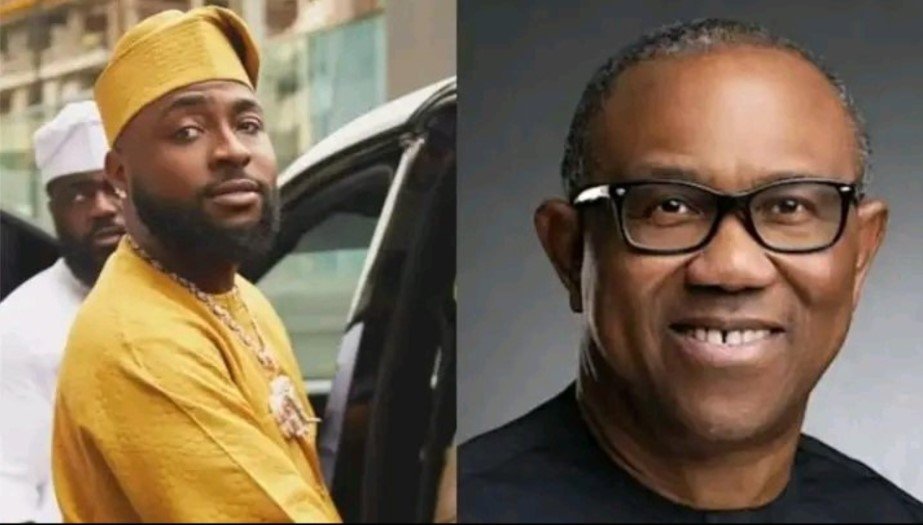
Afrobeats superstar David Adeleke, popularly known as Davido, has challenged Nigerian politicians to publicly explain how they acquired their wealth, following former Anambra State governor Peter Obi’s recent explanation of his business background.
Davido made the call in reaction to a discussion surrounding Obi’s career and financial background, urging politicians across the country to be more transparent about the sources of their wealth.
The singer’s comments have reignited debate over transparency, accountability and the financial backgrounds of public office holders in Nigeria, particularly ahead of the 2027 general elections.
Obi, who governed Anambra State between 2006 and 2013 and was the Labour Party’s presidential candidate in the 2023 election, has frequently spoken about his background in business before entering politics.
His explanation of his career and business interests prompted a wider discussion online, with Davido joining the conversation by challenging other politicians to provide similar accounts of how they built their wealth.
The singer’s position was not an allegation of wrongdoing against any specific politician but a call for greater openness from public officials and political figures.
Davido calls for greater transparency
Davido has previously used his large social media following to comment on Nigerian political and social issues.
His latest intervention focused on the need for politicians to explain their financial backgrounds, particularly when they seek public office or exercise significant political influence.
The singer questioned why politicians should not be expected to publicly account for the sources of their wealth, arguing that Nigerians deserve greater transparency from those who aspire to govern them.
His comments come at a time when questions about the wealth of political office holders remain a recurring issue in Nigeria.
Politicians are required to comply with constitutional and legal provisions concerning asset declaration, while public officials are also subject to scrutiny by relevant anti-corruption and law-enforcement agencies.
Peter Obi’s business background
Obi entered politics after establishing a career in the private sector.
Before becoming governor of Anambra State, he was involved in business and served in leadership positions within several companies and financial institutions.
During public discussions about his wealth, Obi has repeatedly highlighted his experience in the private sector and his involvement in business before entering government.
His background has also been a subject of political debate, particularly since his emergence as a major presidential contender.
Obi was elected governor of Anambra State in 2006 and served until 2013, with a brief interruption following his removal from office before he was reinstated.
He later became the vice-presidential candidate of the Peoples Democratic Party in the 2019 presidential election before leaving the party and contesting the 2023 presidential election on the Labour Party platform.
In the 2023 election, Obi finished third in the presidential race after securing significant support, particularly among younger voters and in several parts of southern Nigeria.
He has since remained an influential figure in Nigeria’s opposition politics and is among the politicians being closely watched ahead of the 2027 election.
Wealth and politics in Nigeria
The question of how politicians acquire their wealth has remained a major issue in Nigerian public discourse.
Political office in Nigeria often attracts scrutiny because of concerns over corruption, abuse of office and the misuse of public resources.
However, wealth itself is not evidence of corruption or criminal conduct.
Politicians can legally accumulate wealth through businesses, investments, professional careers, inheritance and other legitimate sources.
The key issue, particularly for public officials, is whether their financial interests are properly declared and whether their wealth can be lawfully accounted for.
Davido’s comments therefore place renewed attention on the broader question of financial transparency rather than making specific accusations against individual politicians.
Calls for accountability ahead of 2027
The debate comes as political activities intensify ahead of the 2027 general elections.
President Bola Tinubu and his supporters are preparing for the next presidential contest, while opposition politicians and emerging coalitions are also positioning themselves.
The election is expected to generate increased scrutiny of candidates’ backgrounds, policies, financial records and previous public service.
Political parties are likely to face growing demands from voters for greater transparency from candidates seeking elective positions.
Young Nigerians, in particular, have increasingly used social media platforms to question politicians about governance, accountability and their personal wealth.
Davido’s intervention reflects the influence that entertainers and other public figures now wield in Nigeria’s political conversations.
Public accountability remains central
Nigeria’s legal framework provides mechanisms for public officials to declare their assets and allows relevant authorities to investigate suspected financial misconduct.
The Code of Conduct Bureau is responsible for administering the asset declaration regime for public officers covered by the relevant provisions of the law.
Other agencies, including the Economic and Financial Crimes Commission and the Independent Corrupt Practices and Other Related Offences Commission, are empowered to investigate and prosecute certain forms of financial crime and corruption.
For members of the public, however, determining the legitimacy of a politician’s wealth can be difficult without access to reliable financial records.
This is why calls for transparency from political candidates often focus on verifiable records rather than claims made during political campaigns.
Davido’s growing political voice
Davido has become increasingly outspoken on national issues in recent years, joining other prominent entertainers who have used their platforms to comment on politics and governance.
The musician has millions of followers across social media, giving his political comments significant visibility.
His latest remarks have consequently generated discussion among Nigerians online, particularly about whether politicians should provide more detailed accounts of their financial histories.
The debate also comes amid broader conversations about the responsibilities of public figures and the role of citizens in demanding accountability from political leaders.
While Davido’s comments were directed broadly at Nigerian politicians, the immediate trigger was the discussion around Obi’s explanation of his business background.
The singer’s challenge has therefore added another dimension to an already active public debate about political wealth, transparency and accountability in Nigeria.
As political activities ahead of the 2027 elections continue to gather momentum, questions surrounding candidates’ financial backgrounds are likely to remain prominent.
For many voters, the issue is not simply how wealthy a politician is, but whether the individual can clearly demonstrate that the wealth was acquired through legitimate means and whether the person’s financial interests are consistent with the responsibilities of public office.