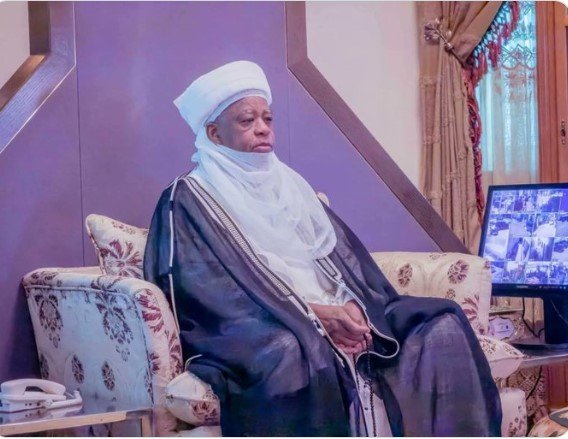
The Sultan of Sokoto, Muhammad Sa’ad Abubakar III, has urged Nigerians to carefully assess the promises being made by politicians before deciding who to support in the 2027 general elections.
The Sultan advised voters to scrutinise what political candidates promise during the electioneering period and make informed decisions at the polls.
His remarks come as political activities ahead of the 2027 elections intensify, with politicians and political parties increasingly presenting their programmes and policy proposals to Nigerians.
The call also comes amid growing debate over the credibility, affordability and implementation of campaign promises as candidates begin to outline their plans for the country.
The Sultan’s position places responsibility on voters to look beyond political rhetoric and carefully consider the implications of the choices they make during the election.
Sultan urges voters to examine political promises
The Sultan’s advice is particularly significant as Nigeria enters a more active phase of preparations for the 2027 elections.
Political parties and candidates have begun presenting different proposals covering the economy, security, education, healthcare, employment, infrastructure and other areas of national development.
The Sultan urged Nigerians not to accept political promises without carefully assessing them.
Rather, voters should consider what candidates are offering, whether the promises are realistic and whether those seeking public office have the capacity to deliver on their commitments.
The message comes against the background of concerns that political campaigns can sometimes be dominated by ambitious promises that may become difficult to implement once candidates assume office.
2027 campaigns gather momentum
Political activities have intensified ahead of the 2027 general elections, with parties and candidates increasingly engaging voters.
The campaign period for governorship and State House of Assembly elections formally commenced on September 9, 2026, while political actors have also been preparing for the presidential and National Assembly contests.
Recent campaigns have featured promises on security, agriculture, education, healthcare, workers’ welfare and economic development.
The growing number of proposals has made it increasingly important for voters to distinguish between campaign rhetoric and policies that can realistically be implemented.
The Sultan’s appeal therefore comes at a time when Nigerians are being presented with competing political programmes and promises.
Economic issues likely to influence voters
The economy is expected to remain one of the major issues in the 2027 elections.
The cost of living, fuel prices, employment, inflation, electricity and household purchasing power are already prominent issues in the political debate.
Candidates and political parties are presenting different approaches to some of these challenges.
The debate over petrol pricing, for instance, has become a major issue in the presidential contest, with candidates proposing different approaches to fuel prices and the question of subsidies.
The competing proposals have prompted calls for voters to consider not only the immediate benefits promised by politicians but also how such policies would be financed and sustained.
Security remains another major concern
Security is also expected to feature prominently during the 2027 election campaign.
Nigeria continues to face challenges involving terrorism, banditry, kidnapping, communal violence and other forms of insecurity in different parts of the country.
Political candidates are expected to present their strategies for addressing these problems and protecting citizens.
The Sultan’s appeal for voters to carefully assess promises is therefore relevant to security proposals as well.
Voters will need to examine whether candidates have clearly explained how their proposed security measures would be funded, implemented and coordinated across the different security agencies and levels of government.
Voters urged to look beyond campaign rhetoric
The Sultan’s advice also reinforces the broader principle that elections should be based on informed choices.
Candidates may make attractive promises during campaigns, but the ability to fulfil those promises depends on factors including government revenue, available resources, legislation, institutions and administrative capacity.
For voters, assessing a candidate’s record and policy proposals can therefore provide a clearer basis for making decisions than relying solely on campaign speeches or political endorsements.
A similar call was made recently by Senior Advocate of Nigeria and political activist Kunle Adegoke, who urged Nigerians to look beyond campaign promises and examine the records, character and antecedents of candidates before voting in 2027. (Independent Newspaper Nigeria)
Sultan maintains non-partisan position
The Sultan’s latest message also comes after his media team recently rejected claims that he had endorsed President Bola Tinubu for the 2027 presidential election.
In August, the Sultan’s media team described reports suggesting that he had urged Nigerians to support Tinubu’s re-election as false.
The media office said the Sultan, as a traditional and religious leader, does not endorse individual political candidates and remains committed to relating with Nigerians across political divides. (This Times)
His latest call for voters to assess political promises should therefore be viewed as a general appeal to the electorate rather than an endorsement of any particular candidate or political party.
Peaceful elections also important
The Sultan has also been involved in efforts to promote peaceful elections through the National Peace Committee, alongside other prominent Nigerians.
The committee played a role in the signing of a peace accord ahead of the 2027 presidential election.
At the August 2026 peace accord ceremony in Abuja, political actors committed themselves to peaceful and issue-based campaigns ahead of the elections.
President Bola Tinubu, represented at the event by Secretary to the Government of the Federation George Akume, acknowledged the role of the National Peace Committee, including the Sultan, in promoting peaceful electoral processes. (State House Abuja)
The peace initiative is aimed at encouraging political parties and candidates to conduct their campaigns without violence and to respect democratic principles.
Why voter scrutiny matters
The 2027 election is expected to be closely contested, with several political parties preparing candidates for the presidency, governorships and legislative positions.
As competition increases, candidates are expected to make more promises to attract voters.
For the electorate, however, the key question will be whether those promises are realistic, properly funded and supported by credible implementation plans.
Political promises concerning cheaper fuel, more jobs, improved security, better healthcare, free education and improved infrastructure can have significant consequences for government finances and public policy.
Voters may therefore need to ask candidates how they intend to achieve their objectives, where the funding will come from and what measurable results Nigerians should expect.
Nigerians to decide at the ballot box
Ultimately, the responsibility for choosing Nigeria’s leaders rests with voters.
The Sultan’s message is a reminder that citizens have a role to play beyond simply attending political rallies or listening to campaign speeches.
Voters will have the opportunity to compare candidates, examine their records and assess their programmes before casting their ballots.
With the 2027 elections approaching, political parties are expected to intensify their campaigns and unveil more detailed policy proposals.
The electorate will consequently face a growing number of choices and competing promises.
The Sultan’s advice is that Nigerians should approach those promises carefully and make decisions based on informed assessment.
As the political contest gathers momentum, the quality of the electorate’s scrutiny could prove as important as the promises made by the candidates themselves.
For Nigerians preparing to vote in 2027, the central message is clear: listen to the promises, examine the records, assess the feasibility and then make an informed choice at the ballot box.