The Federal Government has announced plans to scale up its direct cash transfer programme to reach more poor and vulnerable Nigerians across the country, as part of efforts to cushion the effects of ongoing economic reforms and ensure that citizens feel the benefits of government policies.
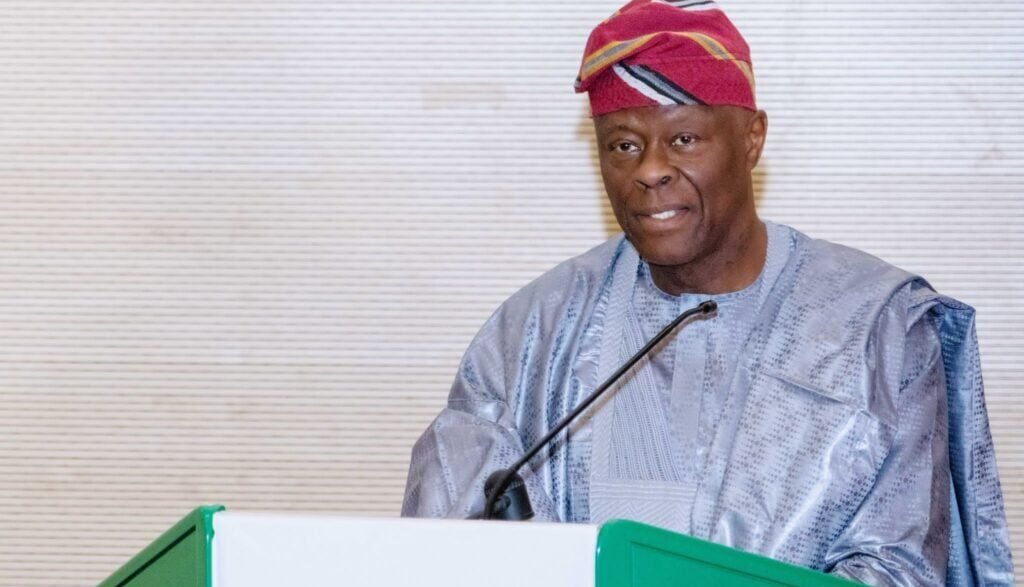
Minister of Finance and Coordinating Minister of the Economy, Wale Edun, disclosed this on Tuesday in Abuja at the Oxford Global Think Tank Leadership Conference and Book Launch, where he said that the administration of President Bola Tinubu is committed to ensuring that the pains of reform are met with immediate relief measures.
Edun revealed that the initiative currently benefits over 15 million households, adding that the government has put in place a transparent, digital, and accountable framework to expand the programme in the coming months.
“There is an attempt to ensure that the pains of reform are immediately alleviated. That’s why there is a transparent, accountable, and robust system of providing direct payments to 15 million households,” Edun said.
He noted that while the government has made notable progress in stabilising inflation and exchange rate pressures, the priority remains to lift millions of Nigerians out of poverty through targeted social safety net interventions.
Economic Context and Need for Expansion
The expansion of the direct cash transfer programme comes at a time when Nigerians continue to grapple with rising costs of living, high inflation, and the ripple effects of subsidy removal and exchange rate liberalisation.
According to the National Bureau of Statistics (NBS), Nigeria’s inflation rate climbed above 30 percent in 2025, driven by food prices, transportation costs, and energy expenses. This has significantly affected the purchasing power of low-income households.
To mitigate these challenges, the Federal Government rolled out the direct cash transfer initiative under its social investment framework, designed to support the poorest and most vulnerable citizens with monthly stipends to meet basic needs such as food, healthcare, and education.
Edun said the decision to expand the programme aligns with President Tinubu’s Renewed Hope Agenda, which prioritizes inclusive economic growth and poverty alleviation.
“The economic reforms are long-term measures to stabilize the economy, attract investment, and create jobs. However, we must ensure that the vulnerable are protected while the benefits of reform begin to take shape,” the minister stated.
How the Direct Cash Transfer Programme Works
The programme, coordinated under the National Social Safety Nets Programme (NASSP), uses data from the National Social Register (NSR) — a database of poor and vulnerable households compiled across the 36 states and the Federal Capital Territory.
Beneficiaries receive direct payments through verified bank accounts or mobile money wallets, with the system designed to eliminate middlemen and reduce corruption. The Ministry of Finance has also integrated biometric verification and digital monitoring tools to ensure accountability and prevent duplication.
Officials from the Ministry of Humanitarian Affairs and Poverty Alleviation confirmed that each beneficiary household currently receives a monthly stipend ranging between ₦25,000 and ₦30,000, depending on household size and location.
According to government projections, the expansion phase could push the number of beneficiaries to 20–25 million households by 2026, reaching an estimated 80 to 100 million Nigerians directly or indirectly.
Transparency and Oversight
Edun assured Nigerians that the programme is built on transparency and accountability. He explained that the government is partnering with financial institutions, digital payment platforms, and development partners to ensure that funds reach only verified beneficiaries.
“We are using a digital payment system that is traceable, accountable, and verifiable. Every naira is tracked from the federal treasury to the beneficiary. There is no room for leakages or political manipulation,” he said.
He added that the government is also working with international organizations such as the World Bank, IMF, and the African Development Bank (AfDB) to strengthen social protection systems and provide technical support for the expansion.
Link to Economic Reforms
Since taking office in May 2023, President Tinubu’s administration has implemented major reforms, including the removal of fuel subsidies and the unification of the foreign exchange market.
While these policies have been praised by economists for improving fiscal discipline and attracting investor confidence, they have also resulted in temporary hardship for Nigerians, particularly low-income earners.
Edun noted that the direct cash transfer programme serves as a critical intervention to cushion the impact of these reforms while the long-term benefits — such as job creation, industrial growth, and improved infrastructure — begin to materialize.
“We are ensuring that the benefits of reform are inclusive. Our goal is not just to stabilize the macroeconomic indicators but to improve the standard of living of every Nigerian,” he stated.
Partnerships with Development Agencies
The Federal Government’s social protection agenda has received support from international partners, including the World Bank’s Nigeria for Women Project, UNDP, and IFAD, all of which are collaborating to strengthen Nigeria’s social safety net framework.
The government is also aligning its cash transfer programme with the Sustainable Development Goals (SDGs), particularly Goal 1 (No Poverty) and Goal 2 (Zero Hunger).
Under the revised national social protection strategy, cash transfers will be complemented with programmes that promote entrepreneurship, smallholder farming, and access to credit for rural households.
Edun said these integrated approaches are crucial for transitioning beneficiaries from social welfare to economic empowerment.
Experts’ Reactions
Economic analysts have described the expansion of the direct cash transfer programme as a positive step toward cushioning hardship, but they also urged the government to ensure sustainability and effective monitoring.
Dr. Olumide Adesina, an economist and development consultant, noted that while cash transfers provide immediate relief, the government must complement them with job creation, skills training, and support for microenterprises.
“Cash transfers are short-term solutions. What Nigeria needs is a long-term poverty exit strategy that empowers beneficiaries to become self-reliant through access to finance and business support,” he said.
Similarly, social policy expert, Dr. Maryam Sani, emphasized the need for periodic audits of the National Social Register to eliminate duplication and ensure that genuine beneficiaries are prioritized.
“Data integrity is key. The government must work with communities, local leaders, and independent auditors to verify beneficiaries and track impact,” she stated.
Broader Impact and Future Outlook
The direct cash transfer programme has already had measurable impacts in reducing extreme poverty levels and improving household resilience. A recent assessment by development partners revealed that beneficiaries often spend the funds on food, school fees, healthcare, and small-scale business ventures.
The Federal Government aims to build on these gains by integrating the programme into a broader financial inclusion and digital economy framework. This includes linking beneficiaries to formal banking services, insurance schemes, and agricultural cooperatives.
With the expansion, Edun said the government expects to not only reduce immediate hardship but also lay the foundation for inclusive and sustainable economic growth.
“Our focus is clear — to rebuild Nigeria’s economy on the pillars of productivity, inclusion, and accountability. Every reform we introduce must improve the lives of our citizens,” he said.
Conclusion
The Federal Government’s decision to scale up its direct cash transfer programme represents a critical step in ensuring that economic reforms translate into tangible social benefits for millions of Nigerians.
While challenges remain — including inflation, data verification, and programme sustainability — the expansion signals a stronger commitment to inclusive governance and human capital development.
As the initiative grows to cover more households, experts believe it could become one of Africa’s most impactful social protection programmes, redefining the way government supports vulnerable citizens in times of economic transition.